Sign up for our Newsletter
Our monthly newsletter lists our upcoming events, reviews, news from the Town House, history features and snippets, plus a local exhibition listing.
Contact Us
The Regency Town House
13 Brunswick Square
Brighton & Hove
East Sussex
BN3 1EH, UK
45 Lower Market Street

Image 1: 45 Lower Market Street.
Source: Right Move
Number 45 Lower Market Street was a house with a dual purpose. Housing tenants in six rooms on the first and second floors, the building also acted as a wine store between 1862 and 1882. In 1884 a mission room was established which finally closed in 1982.
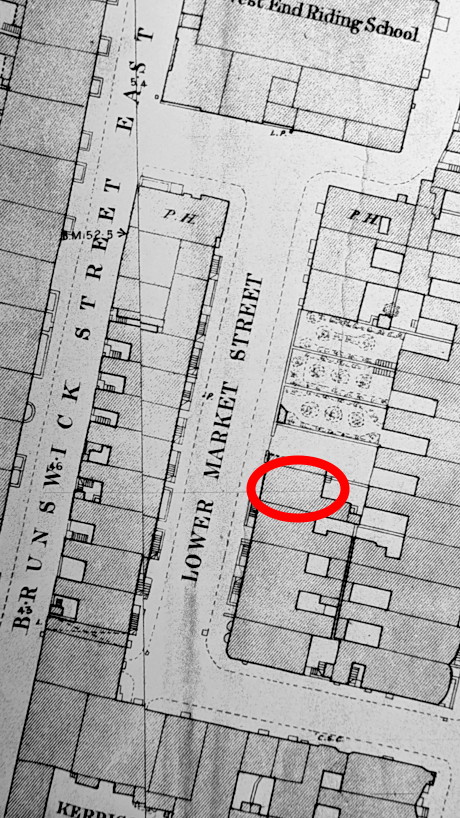
Image 2: Extract from the 1875 Ordinance Survey Map. Four plots of vacant land can be clearly seen on the east side of Lower Market Street. Number 45 is the first building after the lower plot.
The first reference to this building appears in the 1862 street directory. In the censuses for 1851 and 1861 house numbers on the east side of the street, jump from numbers 36 to 48. Between these numbers were four plots of land which are clearly visible on the Ordinance Survey map of 1875 (Image 2). Currently the numbers go from 37 to 43 with a single plot remaining between the houses.
Architectural features:
On close inspection of other houses in the street the front façade of number 45, although showing some similar features to number 46, appears a little grander in comparison to the other houses in the street. One feature which makes it different is its distinctive stylised pediment topped by a small modern figure (see Image 1).
Other unique features include:
- The bay window exists on the first and second floors but does not continue to the ground floor; instead, there is a flat wall, flush with the front doors.
- The house has two front doors. Ground floor plans from 1938 (Image 3) show that the door on the left-hand side led directly into the room on the ground floor; on this plan it is labelled ‘hall’ and was the mission room whilst the door on the right-hand side led to the accommodation on the first and second floors.
- The 1938 plans show that the building had a cellar but unlike other houses in the street there is no basement well at the front of the house.
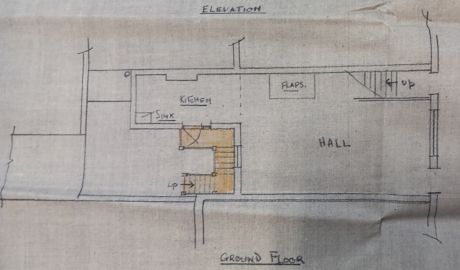
Image 3: Detail from a plan dated 1938 for alterations to the outside rear staircase from the basement to the ground floor, and installation of a new basement toilet. It shows the layout of the ‘mission room’. Note the flaps which opened up to reveal the stairs leading to the cellar. Scale of original plan 1/8” = 1 foot. Source: The Keep
The residents
As well as being a wine store/mission room house number 45 also had paying tenants. Similar to other such working class houses the number of residents varied and changed frequently. Between 1862 and 1882 the street directories only list number 45 as being a wine store and only the censuses give information related to other tenants.
The census for 1871 lists Joseph Jones, aged 37, his wife Eliza, aged 34 and sons Alfred (13), Samuel (4) and daughter Rhoda (8). Joseph’s occupation is given as a milkman. In addition three boarders are listed; John (72) and Anne (60) Vinns and Louisa King (25). John Vinn’s occupation is Bath Chair Man. In the 1881 census the Jones family are living in Lewes.
The 1881 census lists only three people; the Balcombe family. Walter (54), his wife (50) and daughter (24). Walter’s occupation is groom 8/- whilst his wife and daughter are both dressmakers. According to the ’Instructions to the clerks employed in classifying the occupations and ages of the people Census of England, Wales and Islands in the British Seas, 1881’, Order 8 refers to people engaged with animals. Other occupations such as stableman listed on the same census sheet are also labelled 8/- (Image 4).
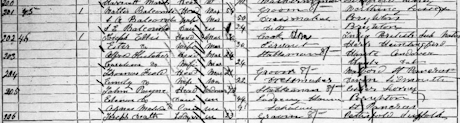
Image 4: An example of how the 8/- mark is used in the 1881 census
The street directory for 1886 lists a new resident William Digweed, a green grocer’s assistant. In the 1891 census his age 37 and he is living with his wife Jemima (38). Six children are also listed, three sons and three daughters aged between 1 and 13. By 1901 William Digweed is listed as a grocer living at the grocer’s shop at 2 Brunswick Street West. William remained there until his death on April 4th 1918 and the 1921 census records Jemima, now aged 68, and her 31-year-old daughter Kate still living at 2 Brunswick Street West with their occupations listed as a general storekeeper and private domestic duties. The 1939 Register lists Kate still living at the address (which was now number 30 Brunswick Street West) as a storekeeper.
In 1900 a new tenant, Martin Frederick Puddick, is listed living at number 45. In the 1901 census he is listed, aged 31, along with his wife Kate (32) and his nine-year-old daughter. Frederick’s occupation is given as a milk carrier. In addition, two ‘boarders’ are listed at the address; S. Simmons (16) a grocer’s assistant and 40-year-old butler, T. Payne who is listed as married. By 1904 the Puddick’s are listed as living at 3 Farm Road with the 1905 street directory listing this address as the Lansdowne Public House suggesting a change in occupation. This change would not last long though with Frederick recorded as dying in 1905 at the age of 35. His wife Kate remarried in 1906 and on the marriage certificate her occupation is given as a licensed victualler. The 1911 census records the family, which includes her 19 year old daughter from her first marriage and a four year old son, as living and running the London Unity public house at 131 Islingword Road with Kate’s husband Henry listed as a beer retailer.
The 1904 street directory lists Vernon Allen living at number 45. In the 1911 census Vernon, aged 44, is listed along with his wife Mary aged 61. In the 1901 census Vernon is listed as a boarder living at number 6 Lower Market Street and in 1902 he married Mary. Vernon’s occupation is given as a gardener working for Hove Corporation; Mary does not have an occupation listed. Two other individuals are listed at the address, Mary Thomas a 39-year-old domestic servant and Eliza Johnston a 46-year-old widow and domestic cook. Mary died in 1912 and in the 1921 census Vernon is listed as a widower and lodger living at 74 Clarendon Road, Hove. In the 1939 Register he has remarried and is living at 33 Sheridan Terrace, Hove; his occupation is given as a retired gardener. Vernon died on the 4th February 1948 aged 81.
The 1915 street directory lists a George Page with the 1916 edition listing a Mrs Wood. The entry for 1918 lists S. Crook and the 1921 census reveals this to be Solomon Crook, a 30-year-old gent’s tailor. Also listed are his 34-year-old wife Jeannie (Jane), his son Henry Jacob (11) and his daughter Josephine Kathleen (5). Included in the census is a 14-year-old general domestic servant Polly Simmons. In 1905 Solomon’s family were living at 15 Richmond Place, Brighton. Originally Russian subjects his father had applied for U.K. naturalisation which was granted to the family on 9th March 1905; his father changing their surname from Kruk to Crook. The 1939 Register places Solomon and his wife at 8 Temple Street, Brighton, his occupation is now listed as a Master Tailor and he is also listed as an A.R.P Warden. His 16-year-old daughter Kathleen is also listed as a blind invalid.
In 1916 one of the residents of 45 Lower Market Street was involved in an accident at work which resulted in his death. William Winter (68) and his wife Elizabeth (66) were living at the address at the time; in the 1911 census they were living at 60 Viaduct Road, Brighton and his occupation is given as a ‘sugar boiler’. At the time of his death he was working as a porter for William Breach, Fruiterer at 37 Western Road. At the inquest to his death it was reported that on 25th November he fell down some stairs and was found unconscious. He was taken to Hove Dispensary where he died on the first December. At the inquest his wife reported that he had been ‘quite well’ when he left for work and that he was ‘fairly conscious’ when she saw him in the dispensary. The Coroner concluded that he ‘died from the effect of brain softening accelerated by a fall down stairs at 37 Western Road’.
The 1939 Register lists six people living at 45 Lower Market Street. Frederick Clark a 71-year-old metal merchant, his wife Florence (47) and their six-year-old son or grandson Michael. Also listed are Albert Kendall (60) a tailor (an alternative name of Arthur Rensly Kilner given), and Ellen Jane Maplesden (68) retired living on private means. A sixth name is redacted on the register.
A wine store
Between 1872 and 1882 the street directories list number 45 as a wine store. Prior to that, between 1862 and 1869 the street directories list Joseph Anscomb at the address with his occupation given as a wine cooper. The 1863-1868 electoral registers also place James Anscomb at the address; by 1870 he is living at 60 Waterloo Street. Evidence suggests that number 45 may have been built by the Anscomb family specifically as a wine store (see image 7). This may explain why there is a flat wall on the ground floor as opposed to a bay window; this may originally have been the doors into the wine store opening directly onto the street.
In the census for 1841 and 1851 Joseph Staker Anscomb is listed at 42 Waterloo Street with wife Frances and sons Edward (19) and John (16). His occupation is given as a brewer. In the 1861 census he is listed as a widower living at number 60 Waterloo Street with his son Edward (29) and grandson James (9). His occupation is now given as a wine merchant and his son is listed as a grocer. 60 Waterloo Street was also the headquarters for the company; with 45 Lower Market Street acting as the store (Image 5).
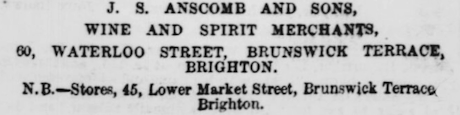
Image 5: Brighton Gazette - Thursday 20 March 1862
Joseph died on 10th September 1868 and his probate indicates the business was passed onto his sons. The census for 1871 lists his son James (48), along with his wife Sarah (42) and six children, living at 60 Waterloo Street; he is listed as a wine merchant. The family are still listed at this address in the 1881 census. The 1891 census lists James (68), wife Sarah (62) and their son William Harry (33) and daughter Elizabeth (31) living at 57 Ditchling Rise. James’s occupation is listed as a retired wine merchant; by contrast his sons’ occupation is a draper’s assistant. James died on 24th June 1892.
Edward Anscomb is also listed as a wine merchant in the 1871 and 1881 censuses and by 1891, at the age of 69, he is listed as a retired wine merchant. The final listing in the street directories for the wine store is in 1882 and in 1900 the Anscomb family put the freeholds for number 45 Lower Market Street, 57 Ditchling Rise and one other property up for sale by auction (Image 6).
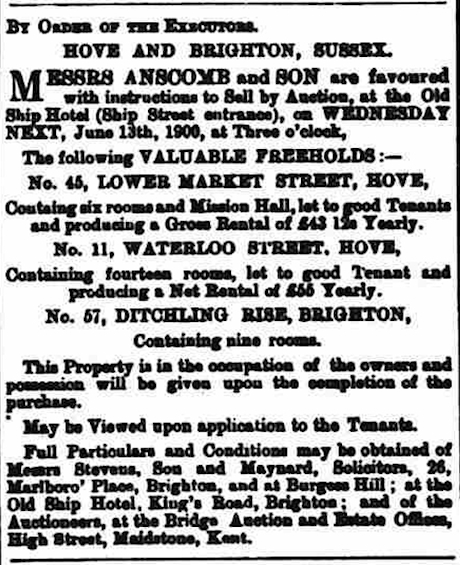
Image 6: Brighton Gazette - Thursday 07 June 1900
Brighton & Hove Town Mission Hall
In 1845 the novel Sybil was published. Written by Benjamin Disraeli it is also known as ‘The Two Nations’ with a key theme in the novel highlighting the social and economic divide between the rich and poor in Victorian Britain. This is exemplified by one of the characters who believes that Queen Victoria effectively reigns over two nations; ‘between whom there is no intercourse and no sympathy; who are as ignorant of each other’s habits, thoughts, and feelings, as if they were dwellers in different zones, or inhabitants of different planets; who are formed by a different breeding, are fed by a different food, are ordered by different manners, and are not governed by the same laws.’
It is worthwhile reflecting on these differences when comparing Brunswick Square and Brunswick Terrace in comparison to the service streets hidden and tucked behind the grandeur of the great houses: Brunswick Street West, Brunswick Street East, and Lower and Upper Market Streets. This disparity is illustrated in a verse written in the 1860s and left in the homes of the well to do in Brighton and Hove by Miss Anne Padwick, a long-term supporter of the Brighton and Hove Town Mission:
Do you know of those backstreets and alleys so drear,
Where there’s nothing to solace and little to cheer?
A contrast are these to the gay promenade
Of your beautiful town with its sunny façade.
Ah! Little you heed as you drive to and fro,
The haunts of the masses, those hovels of woe!
The Brighton Town Mission was established in 1849; Hove was added to the name in 1887. Following the example of the London City Mission, it was deemed important that missionaries were assigned to a specific district. This meant that systemic visitation could take place and missionaries could get to know the people in their district. The Lower Market Street Mission Hall was established at number 45 in 1884. This was one of many such halls to open, others including Sussex Street Mission Hall in 1878 and Bentham Road Hall in 1883.
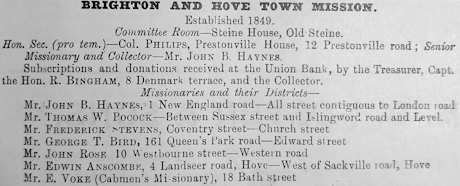
Image 7: Street Directory 1900. Note John Rose who will be discussed later and E. Voke who had specific responsibility for the Cabmen’s Mission
Image 7 shows the specific districts covered by individual missionaries in 1900. The challenge facing missionaries was quickly identified, ‘the Gospel and ignorance, squalor, drink, filth and other evils could not live together. Either the Gospel must kill them, or they would render the Gospel ineffective’ (Bonarjee 1949). The seasonal nature of some occupations, such as cabmen, flymen and bathchair men, were a particular area of concern. The out of season winter months were considered dangerous because ‘idleness, lack of social amenities, the squalor of their own homes in the slums, drove them to the public house and to drink’.
Bonarjee (1949) states that ‘with the exception of a very few, notably that of the Emmanuel Church, Hove, the Churches of Brighton and Hove have not been regular supporters of the mission’. It comes as no surprise, therefore, that the street directory for 1898 when listing the Mission Room at 45 Lower Market Street states ‘belonging to Emmanuel Church, used by the Brighton and Hove Town Missions’.
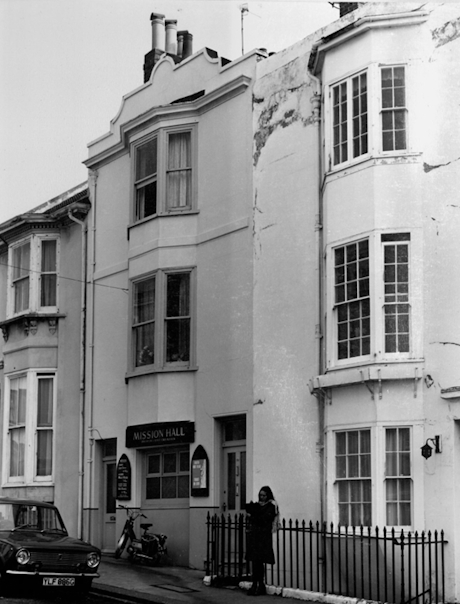
Image 8 45 Lower Market Street 1975.
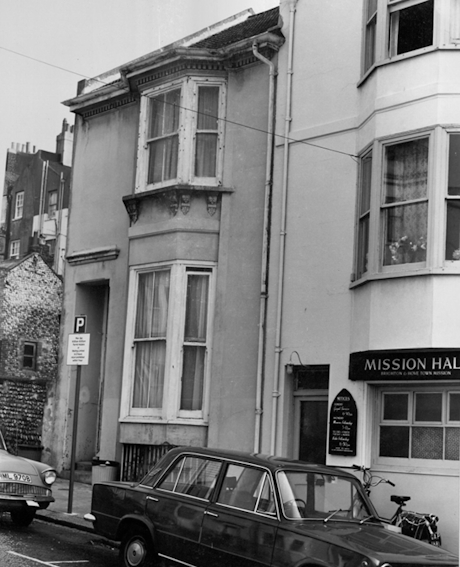
Image 9a: 45 Lower Market Street 1975. The mission sign (image 9b) is clearly visible. The notice board is listing services and times. Note the figure on the roof, seen in image 1, does not appear in these images. Source: Planning Department photographs of buildings in the Brunswick Town conservation area. The KEEP
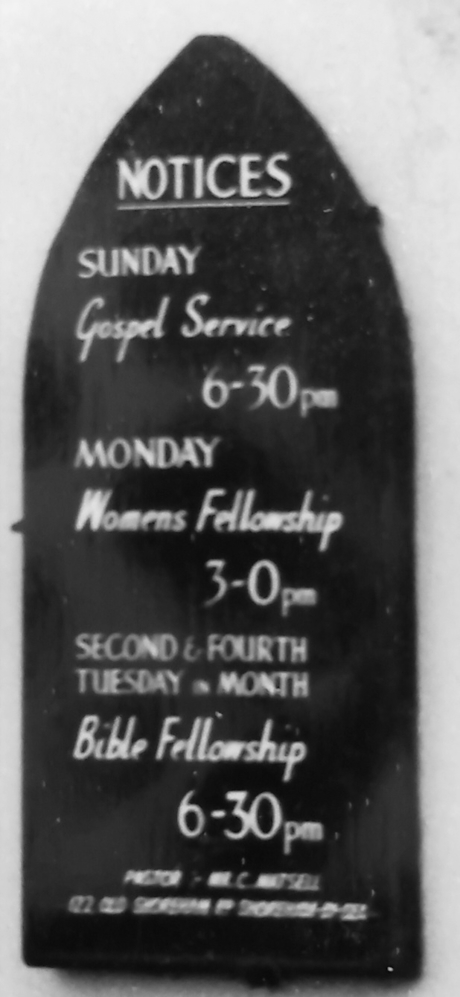
Image 9b: The mission sign
The Brighton Gazette 10th November 1870 reports on the Annual Report meeting quoting the chairman who reflecting on, and recognising the work of the Mission, states:
‘In this town there was abundant scope for the work of this Mission, notwithstanding our many Churches and Chapels, ministers of religion, schools and the like, for there were thousands still beyond the reaches of these agencies in the dark streets and alleys, - multitudes living in ignorance, infidelity, or superstition, never entering a place of worship or reading their Bible. Surely, it was our duty to go amongst these, pointing out where their error was and where the truth really was to be found’.
In the 1890 Annual Report (Brighton Gazette May 1st 1890) it is reported that the missionaries do not experience the amount of ‘active opposition’ but there still exists a great amount of indifference: ‘The desire for pleasure and excitement seems also to be destroying home life. A result of this craving for pleasure is improvidence; the money which should be saved for times of possible distress from illness or want of work is spent on some needless amusement. The need and importance of domiciliary visitation is proved by the nature of some of the remarks made to the Missionary when he calls, such as: “Religion is not wanted down this street,” “we can’t be always thinking about religion,” “I am as good as those who go to Church,” “I worked hard all the week and want rest on a Sunday,” “The Bible is hard to understand.”’
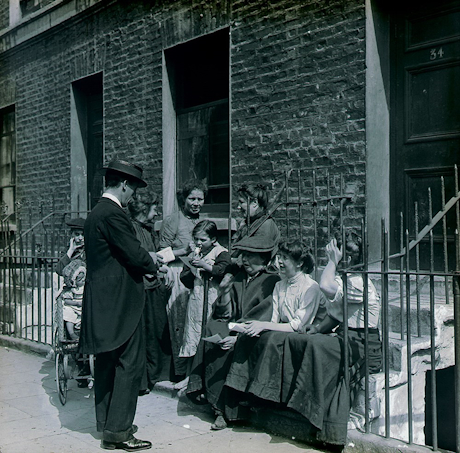
Image 10: London street missionary, c.1900. Source London City Mission
Both the 1881 and 1891 censuses record that there were three beer houses and two public houses in Lower Market Street. By 1901 this had reduced to two public houses and two beer retailers. In addition to these Upper Market Street had two public houses and Brunswick Street West one public house and two beer houses. This does not include the larger public houses located on Western Road or Waterloo Street. Drunkenness among the poor was something that the Mission felt must be addressed head on so visits to public houses were made and a temperance movement started.
Bannier quotes one missionary who wrote in his Journal ‘Visiting such places was dangerous but rewarding work. One man threw some beer in my face and so the publican told me to leave. Some of the men however requested me to stay. One man said addressing the company, “It is no small thing for the gentleman to come here in this way to try to do us good, and then to have beer thrown in his face. I think we ought to listen to what he has to say.” With the consent of the publican, and amidst perfect silence, I gave a gospel address. When I had done several thanked me and one said, “I think you have done a little good here tonight.”’
At the annual meeting of The Brighton and Hove Town Mission in 1900, the importance of Town Missionaries is stressed: ‘The Brighton and Hove Mission ought, he contended, to receive the bountiful support of every church in the town, because it supplied a want which was calculated to counteract the evils of the day – drunkenness, vice and gambling – which were the outcome of the neglect of God’s word, the neglect of God’s day and the neglect of God’s house’. (Brighton Gazette, Thursday 27 September 1900).
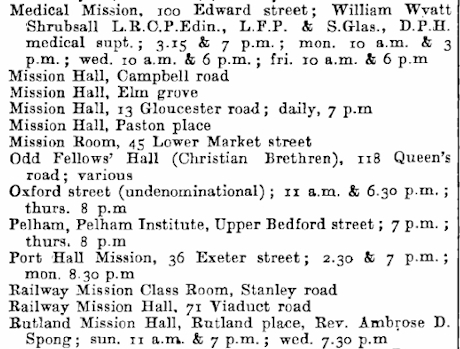
Image 11: Kelly's Directory 1905: extract from the list of ‘Mission Churches and Rooms’. Amongst all the other religious establishments in Brighton and Hove a total of 32 ‘Mission Churches and Rooms’ are listed.
John Rose Town Missionary
From 1902 to 1929 John Rose is listed in the Street Directories as a missionary at 45 Lower Market Street with his district identified as ‘Western Road (see Image 7). John was born in Brighton in 1846.
In the 1851 and 1861 censuses John was living with his parents at 19 Brunswick Place North; the youngest of six children all living at home. In 1861 aged 15 his occupation is given as a tailor; the same occupation as his father. On July 20 1869 John married Mary Hockford at St Nicholas Church, Brighton. Both were 24 years old and John is listed as living at 1 Richmond Street, Brighton. In 1871 John and Mary are living at 19 Clermont Road, with his occupation still given as tailor.
The 1881 census records John and Mary, who now have three children, living at 31 Cuthbert Road, Brighton. Aged 35 his occupation is now given as a Missionary. John was typical of individuals recruited to be missionaries. The London Mission, for example, aimed to recruit candidates from the working classes who had the same background and, it was hoped, could communicate in a way relevant to those they would be working with.
Missionaries such as John must have relied on the support of their family to carry out and succeed in the role. Bonarjee (1949) describes what the role would involve: ‘The missioners employed by the Mission were to be men of “approved” character, and from the very first the strictest scrutiny has been observed in their selection. Their duties were defined to be to visit from house to house, visit the sick and dying, read the Scriptures, engage in religious conversation, urge Sabbath breakers to keep the Lord’s Day, and to attend public worship. They were to distribute the Scriptures and approved religious tracts, urge parents to send their children to Sunday Schools, hold Bible and Prayer meetings, and adopt such other means as the Committee may think necessary’.
The censuses for 1891 and 1901 place John as living at 10 Westbourne Street with his wife Mary, daughter and two sons. His occupation is given as Town Missionary Hove. By 1911 John, Mary and their son are living at 8 Buxton Road Brighton. In the 1921 census John and Mary are recoded as living with their son in law and daughter at 50 Highdown Road, Hove. His occupation, at the age of 77, is still given as Town Missionary. His name is finally listed in the street directories in 1929 although it appears that he died in 1928.
Conclusion:
From 1956 the Mission Room at 45 Lower Market Street acted as headquarters for the Brighton and Hove Town Mission and continued to do so until it was sold in 1982. The building now consists of a basement flat and a maisonette on the first and second floor with the ground floor acting as the entry hall to each flat. The Brighton and Hove City Mission still continues its role working in partnership with others, including churches, schools, charities, and the local authority.
Sources:
Bannier, B. (2009) Into the Streets and Lanes: A History of the Brighton & Hove City Mission 1849-2009. Brighton: Brighton and Hove City Mission
Bonarjee, P (1949) The Centenary History of the Brighton and Hove Mission: Centenary Celebrations 1849-1949.
Researcher: Thomas Aird, April 2025
Return to Brunswick Town page